
How to write an Amazon bestseller – advice from JD Kirk and LJ Ross
Insights from the 2025 London Book Fair panel chaired by Jen Barrett (UK Lead, Kindle Direct Publishing).
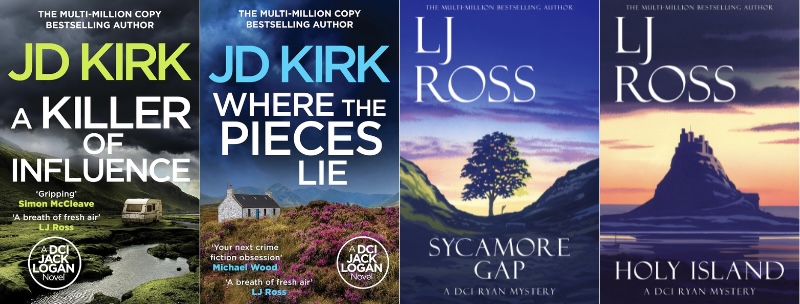
This year’s London Book Fair included a panel discussion featuring two hugely successful independent crime fiction authors: JD Kirk and LJ Ross. They shared their self-publishing journeys and insights into creating bestselling books. Here are some of the key takeaways.
Meet the authors
JD Kirk (real name Barry Hutcheson), began his writing career creating children’s books and comedy science fiction before finding success with his Scottish crime fiction series. Known for his distinctive blend of gritty crime with humor and memorable characters, JD has built a devoted readership who can’t get enough of his Scottish detective stories.
LJ Ross is the author of the popular DCI Ryan series set in the North East of England. With over 30 books published and millions of copies sold, LJ came to writing after a career as a lawyer prosecuting white-collar crime. Her second novel in the series, Sycamore Gap, became a breakout hit and established her as one of the UK’s most successful independent authors.
Write what you love – not what you know
JD Kirk started off with a challenge to that familiar old piece of writing advice: ‘write what you know’. “Write what you know is nonsense,” he declared. If we all did that, “No one would ever write science fiction!” Instead, he suggested “Write what excites you. Your enthusiasm feeds into that story and onto the page, and readers pick up on that.”
LJ Ross echoed this sentiment, emphasizing the importance of authenticity: “Write what you enjoy, what you like to read, what you love. We’re readers first.” She believes that passion, authenticity, and originality are the cornerstones of creating compelling fiction that resonates with readers.
Find your voice and style
Your authentic voice is your greatest strength. It’s an elusive thing that’s hard to define, but something that agents always say they want – and that readers respond to. According to the panel, the key is to avoid forcing yourself into a writing style that doesn’t feel natural.
Both authors talked about how they discovered their unique voices. LJ said that, while she writes in different genres, readers can still identify her distinctive style across her works. Having previously written legal advice in her career as a lawyer, she started writing – in the very different style and tone required for commercial fiction – as a form of escapism. So don’t be afraid to break out of your comfort zone, and try new things, in pursuit of a voice and style that feels right to you.
JD shared that he initially attempted to write crime fiction that was serious and gritty, but it “wasn’t settling in at all.” When he allowed his natural voice to come through – the same one that had served him well in his comedy sci-fi and children’s books – he found his stride in crime fiction too.
Planning v. ‘Pantsing’
The eternal question of whether to meticulously plot your novel or write by the seat of your pants (‘pantsing’) received balanced treatment from both authors.
LJ Ross described herself as a bit of both: “I have a flowchart: start, middle, end, things I must include – just as a memory jog.” With dozens of books under her belt, she emphasized the importance of thinking 3-4 books ahead when writing a series, “so you don’t write yourself into a corner.”
JD Kirk admitted he “struggles to plan” and that his stories often change as he writes them. However, he always knows “who did it, how they did it, and why they did it” before starting, and then pieces everything else around that core.
Keep readers turning the pages
JD shared a simple but effective technique for keeping readers engaged: “Every chapter ends with something unresolved. I want people to read one more chapter.” He creates mini-cliffhangers that compel readers to continue, a strategy that has clearly served him well.
Both authors emphasized the importance of creating characters readers want to spend time with. JD noted that this connection is often what determines whether a book has bestseller potential.
Handling feedback and criticism
Not everyone will like your work – and that’s OK. When asked about incorporating reader feedback, JD urged new writers not to worry too much about reviews. “I write first and foremost for myself. I’m not writing for everyone – I’m writing for people who like Scottish crime fiction with swearing in it!” LJ Ross offered a valuable distinction: “Understand the difference between criticism and critique. In early days, critique can help you find your way in your craft. But if someone doesn’t like romance, don’t read it and then criticize it.”
The freedom of self-publishing
Both authors highlighted the creative and financial benefits of self-publishing through platforms such as Kindle Direct Publishing (KDP), which launched in 2007 alongside the first Kindle device.
“I’m financially better off, but creatively better off too,” JD explained. “There’s no publisher to change characters or direction.” LJ Ross said that she had turned down a traditional publishing offer for her first book because “the terms weren’t good.” Her bold decision and confidence in her own work paid off. Her attitude was: “I know this is my first attempt, but I have to believe I’m worth more than this.”
Build confidence as an author
Perhaps the most encouraging message from the panel was about building confidence as a writer. “Have confidence,” urged LJ Ross. “Lack of self-confidence in any creative endeavor can lead to bad decisions. You might wait 10 years when you could have written a good book in 6 months.” This is where self-publishing can have an advantage over traditional publishing. “If you’re waiting for a gatekeeper to tell you you’re good enough to write, you’ll be waiting forever,” she said. LJ also emphasized the importance of maintaining “a well of self-esteem so you never forget why you wanted to do this job in the first place.”
JD Kirk reassured aspiring authors by admitting: “Every time I sit down to write, I think I don’t know how to write a book.” He noted that impostor syndrome affects almost everyone, but “it gets easier” with practice and persistence.
Authenticity is key
Both authors emphasized authenticity, passion, and confidence. Neither suggested chasing trends or following formulaic approaches to writing. Instead, they advocated for creating stories that excite you as a writer, trusting that your enthusiasm will translate to the page and resonate with readers.
Whether you’re just starting your writing journey or you’ve been at it for years, these insights from authors who have achieved remarkable success through self-publishing offer both practical guidance and inspirational encouragement. The path to becoming a successful author is never easy. But with passion, persistence, and a willingness to trust your voice, it’s certainly possible.